
Altior and the Agentic AI Frontier: The Real-World Data Foundation
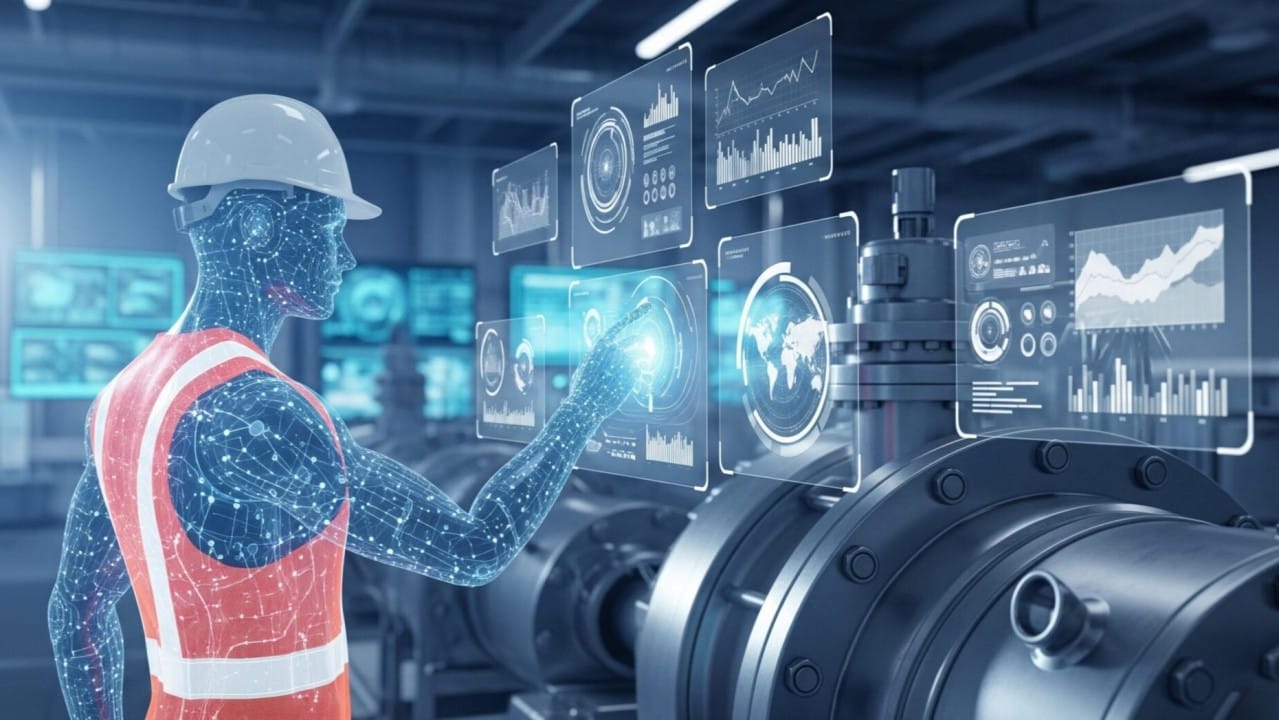
Agentic AI is increasingly being introduced into operational systems.
This development reflects a shift in how software systems are designed and used. Rather than supporting isolated tasks, systems are now participating in ongoing decision processes—interacting with infrastructure, coordinating workflows, and executing actions across distributed environments.
In industrial contexts—such as energy, utilities, water, manufacturing, and transport—these systems operate in close proximity to physical assets. Decisions made by software may influence equipment behaviour, service continuity, or resource allocation. As a result, the quality of system state, the timing of data, and the integrity of execution become central considerations.
In many operational estates, data is:
These characteristics influence how accurately a system can form a representation of the physical world.
This can be described through the concept of the first mile—the stage at which data is generated by physical assets and made available to digital systems. The properties of this layer determine how system state is constructed, validated, and maintained over time.
Agentic systems as state-dependent processes
Agentic systems can be understood as state-dependent, distributed processes.
Unlike stateless or batch-oriented systems, they operate continuously and respond to events as they occur. Their behaviour depends on access to current system state and on the ability to interpret that state within context.
This introduces several architectural requirements.
Continuous and available state
For a system to make reliable decisions, it must have access to current operational state.
In industrial environments, maintaining this state involves more than collecting data. It requires infrastructure that can:
High availability and fault isolation are therefore directly related to the accuracy of decision-making, as they ensure that state remains accessible and coherent over time.
Verified identity and provenance
Each data point must be associated with a known source.
This involves:
This allows systems to reason over data that is attributable and consistent, rather than inferred or ambiguous.
Observability and lifecycle awareness
Agentic systems evolve continuously as they interact with changing environments.
Maintaining reliability requires visibility into:
Observability enables operators and systems to understand behaviour, detect anomalies, and maintain alignment between digital representations and physical processes.
The first mile in industrial systems
These requirements are often constrained at the point where data enters the system.
Industrial environments typically include:
At this stage, data may:
This affects how system state is formed before it reaches enterprise platforms.
Altior as a data-in-transit platform
Altior operates at this boundary as a data-in-transit platform between operational technology (OT) and enterprise systems.
Rather than acting as a storage layer, it manages how data is:
Data is normalised into consistent semantic structures, allowing different asset types to be represented using a common schema.
This provides a uniform interface for systems that consume operational data, reducing the need for device-specific integrations.
Alignment with agentic system requirements
Stateful digital twins as concurrent processes
Each asset is represented as a digital twin implemented as a stateful, concurrent process.
This means that:
Each twin is responsible for:
These processes are supervised, meaning that if a process fails, it is restarted and restored to its previous state. This supports continuity and resilience in environments where systems must operate continuously.
A central configuration layer ensures that all twins follow consistent definitions and behaviours.
Event-driven processing and controlled execution
Data is processed as events at the point of ingestion.
This enables:
Altior separates the control plane from the data plane. Decisions originating from external systems are evaluated against local policies before being executed.
This allows systems to maintain defined boundaries around how actions are carried out.
Protocol abstraction and standardisation
Industrial environments include a wide range of communication protocols and device types.
Altior abstracts these differences by:
This enables systems to interact with diverse assets through a unified interface, supporting scalability and reducing integration complexity.
Observability and feedback loops
The platform provides visibility into:
This supports monitoring, validation, and continuous improvement of systems that depend on operational data.
Security and governance at ingestion
Governance is applied at the point where data enters the system.
This includes:
Applying these controls at ingestion ensures that data remains secure and traceable throughout its lifecycle.
Sovereignty and operational boundaries
Industrial systems operate within defined organisational and regulatory contexts.
This requires control over:
Altior supports deployment models that maintain these controls within operational boundaries, including on-premise and private cloud environments.
In this context, sovereignty relates to control over identity, policy, and execution rather than location alone.
Conclusion
Agentic systems rely on accurate and continuously maintained representations of the environments in which they operate.
In industrial contexts, this is established at the first mile, where data is captured, structured, and governed.
When this layer provides:
systems can operate on a reliable representation of physical conditions.
Altior provides these capabilities at the boundary between operational and enterprise systems, enabling downstream platforms to interact with data that is structured, current, and governed.